Summer Jobs for High School Students: GlobalFinMate
Summer break means different things to different teenagers. For some, it’s a time to sleep in and binge TV shows. For others — the smart ones — it’s the perfect opportunity to earn real money, sharpen life skills, and take their first steps toward financial independence.
If you’re a high school student in the USA looking for ways to make the most of your summer, you’re in the right place. Whether you want to save up for college, contribute to household expenses, buy your first car, or simply learn how money works, a summer job can change your financial future in ways that a classroom never will.
At GlobalFinMate, we’re all about empowering people to make smarter financial decisions — and that starts young. In this guide, we’ll walk you through 12 great summer jobs for high school students, including what each job pays, what skills you’ll gain, and practical money tips to help you grow your earnings into something meaningful.
1. Babysitter
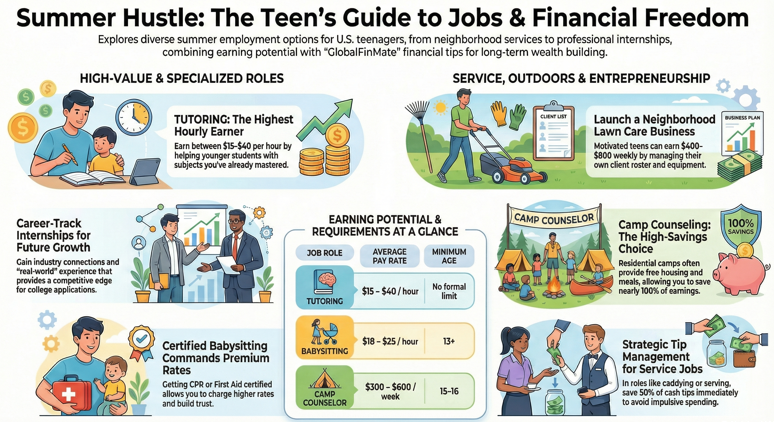
Average Pay: $18 – $25 per hour
Minimum Age: 13+ (varies by state)
Best For: Responsible teens with patience and a nurturing personality
Babysitting is one of the oldest and most dependable summer jobs for teenagers — and it pays better than most people expect. Busy parents, especially during summer when school is out, are constantly searching for reliable, trustworthy sitters to look after their children. If you’re dependable, calm in stressful situations, and genuinely good with kids, families will keep calling you back all summer long.
To command higher rates, consider getting CPR and First Aid certified through the American Red Cross. It’s a small investment that signals professionalism and earns you serious trust with parents. Platforms like Sittercity and Care.com also make it easy to connect with local families who need regular childcare help.
The more reliable you are, the more word spreads — and before you know it, your summer calendar fills up through referrals alone.
GlobalFinMate Money Tip: Babysitting income can be inconsistent week to week. Set up a simple budgeting system — note down every payment you receive and separate it into three buckets: savings (at least 40%), spending money, and an emergency fund. Even a small buffer of $100–$200 for unexpected expenses is a smart habit to build early.
2. Camp Counselor
Average Pay: $300 – $600 per week (many residential camps also provide free housing and meals)
Minimum Age: 15–16 (varies by camp)
Best For: Outgoing, energetic teens who enjoy working with kids and the outdoors
Working as a camp counselor is one of the most enriching summer jobs a teenager can take on. You’ll spend your days leading activities, keeping campers safe, solving problems on the fly, and building genuine connections with both kids and fellow counselors. It’s the kind of job that college admissions officers and future employers love to see on a resume.
Camps across the USA cater to almost every interest imaginable — sports, arts and crafts, music, STEM, nature, drama, and more. If you’d rather come home every night, day camps are a great option. If you want the full experience (and the cost-saving benefit of free room and board), residential overnight camps could mean your entire paycheck goes straight to savings.
Employers usually prefer candidates with safety certifications, but many camps are happy to train motivated applicants from scratch.
GlobalFinMate Money Tip: If your camp covers housing and meals, your expenses during those weeks drop to nearly zero. That’s a rare chance to save almost 100% of your earnings. Consider opening a student savings account before camp starts and automatically deposit your paycheck each week. By summer’s end, you could have a substantial nest egg.
3. Landscaping and Lawn Care Worker
Average Pay: $15 – $25 per hour (more if self-employed)
Minimum Age: 14–16
Best For: Teens who enjoy working outdoors and don’t mind physical labor
There’s no shortage of lawn care work in American neighborhoods during summer. Grass grows fast, gardens need tending, hedges get unruly, and most homeowners simply don’t have the time or energy to keep up. That’s your opportunity.
You can either join an existing landscaping company or — for the entrepreneurial-minded teen — start your own small business by knocking on doors in your neighborhood. With a lawnmower (borrowed or rented to start), a trimmer, and a few flyers, you can build a steady roster of weekly clients fairly quickly. Some motivated teens earn $400–$800 per week just from neighborhood lawn care during peak season.
Institutional clients like schools, golf courses, and office parks also hire seasonal workers, though operating heavy machinery is typically restricted to those 18 and older.
GlobalFinMate Money Tip: If you operate your own lawn care business, you are technically self-employed. That means you should set aside roughly 20–25% of your earnings for taxes. Open a separate checking account just for business income and expenses — even a basic free student account works. Keeping your business and personal money separate is a habit that professional business owners swear by.
4. Pool Cleaner
Average Pay: $14 – $20 per hour
Minimum Age: 14–16 (check local labor laws)
Best For: Detail-oriented teens who enjoy working outdoors with a flexible schedule
If you live in a suburban neighborhood with plenty of private pools, pool cleaning is a goldmine hiding in plain sight. Homeowners with pools need them cleaned, chemically balanced, and maintained regularly throughout the summer — and many would rather pay someone else to do it than deal with it themselves.
Like lawn care, you can work independently or for an established pool service company. Condo complexes, apartment buildings, and homeowner’s associations with shared pools are also excellent clients to target since they need regular, reliable service all season long.
The work itself isn’t overly strenuous, there’s no boss hovering over your shoulder, and you can often set your own schedule — making it one of the more flexible summer jobs for high school students.
GlobalFinMate Money Tip: Pool cleaning equipment involves upfront costs — chemicals, testing kits, nets, brushes. Before spending out of pocket, ask a client to cover the first month’s supply costs, or factor supply costs into your pricing. Understanding how to price your services to cover both expenses and profit is one of the most valuable business skills you can develop as a teenager.
5. Career-Track Internship
Average Pay: $12 – $25 per hour (paid); career experience (unpaid)
Minimum Age: 16+
Best For: Motivated, goal-oriented students with a clear career interest
Not every summer job has to be about the immediate paycheck. A structured internship in a field you’re genuinely interested in — finance, law, healthcare, technology, marketing — can open doors that no part-time job ever could. You’ll build professional connections, learn real industry skills, and get a competitive edge when applying to colleges and jobs down the road.
Many banks, credit unions, insurance companies, and financial firms offer summer internship programs specifically designed for high school students. Even if the position is unpaid, the mentorship and hands-on experience you gain are worth their weight in gold.
To find opportunities, speak with your school guidance counselor, ask family friends in professional fields, and search platforms like LinkedIn, Indeed, and Internships.com for teen-friendly summer openings.
GlobalFinMate Money Tip: If you’re interning at a financial institution, absorb everything you can — how loans work, what credit scores mean, how investments grow over time. Understanding these concepts in a real-world environment is an education money can’t easily buy. Ask your supervisor thoughtful questions. The connections you make in a summer internship can shape your entire career trajectory.
6. Tutor
Average Pay: $15 – $40 per hour
Minimum Age: No formal requirement
Best For: Academically strong students who excel in specific subjects
If you’re the student who always “gets it” faster than everyone else — in math, science, English, foreign languages, or standardized test prep — tutoring is one of the highest-value summer jobs available to teenagers. Parents actively seek out tutors for their kids during summer, either to keep knowledge fresh or to help struggling students catch up before the next school year.
As a high schooler, you’re actually in a unique position — younger students find it easier to connect with someone closer to their own age. Your methods are relatable, your experience with the subject matter is recent, and your energy is higher than many adult tutors.
Advertise your services on Nextdoor, Facebook community groups, local library bulletin boards, and word of mouth. Build a few client relationships early in summer, and referrals will take care of the rest.
GlobalFinMate Money Tip: Tutoring income is freelance income, which means taxes work differently than a traditional job. If you earn more than $400 in a year from tutoring, the IRS expects you to report it. Track every session and payment using a free tool like a simple spreadsheet or an app like Wave. Getting into the habit of tracking income and expenses now will save you major headaches once you’re an adult.
7. Barista or Restaurant Server
Average Pay: $12 – $20 per hour (base) + tips
Minimum Age: 14–16 (varies by state and employer)
Best For: Social, fast-paced teens who thrive in customer-facing environments
Coffee shops, diners, casual restaurants, and fast food chains ramp up hiring every summer — and they’re generally very willing to take on high school students with little to no experience. The work is fast, engaging, and rarely boring. You’ll learn how to multitask, handle pressure, communicate professionally, and work as part of a team.
Major chains like Starbucks are known for offering competitive starting wages (often $15–$20 per hour depending on location) plus benefits for part-time workers. Even tips at a modest coffee shop or brunch spot can significantly boost your weekly take-home pay.
GlobalFinMate Money Tip: If you earn tips, resist the urge to spend that cash immediately. A smart strategy is to keep your base paycheck for regular savings and use tips as “extra” money — either for personal spending or to accelerate your savings goal. This way, you always build wealth with your base income regardless of how tips fluctuate week to week.
8. Grocery Store Worker
Average Pay: $12 – $16 per hour
Minimum Age: 14–15 (varies by state)
Best For: Reliable, punctual teens looking for steady, structured work
Grocery stores are always hiring, and they’re one of the most accessible employers for first-time teen workers. Whether you’re bagging groceries, stocking shelves, running a cash register, or working in the deli department, supermarket jobs provide a solid introduction to the working world.
Pay tends to be a few steps above minimum wage, and larger chains often provide additional perks — employee discounts, scholarship programs, and even union membership in some cases. Union membership, in particular, means negotiated pay rates, protection from unfair treatment, and a built-in support structure that many teens never know exists.
Look into national chains like Trader Joe’s, Whole Foods, Kroger, Costco, and Publix, which are known for treating employees well and offering more than the industry standard.
GlobalFinMate Money Tip: Many grocery chains offer employee scholarship programs worth hundreds or even thousands of dollars toward college tuition. Before you take the job, ask HR about any education benefits. Free money for college is one of the best financial perks a summer job can offer — don’t leave it on the table.
9. Golf Course Caddy
Average Pay: Minimum wage base + tips (tips can range from $20 – $100+ per round)
Minimum Age: 14 (where labor laws permit)
Best For: Teens who enjoy golf, the outdoors, and are comfortable with physical activity
Caddying might not be on every teenager’s radar, but it’s one of the most financially rewarding summer jobs available for those who live near country clubs or golf courses. The base pay is modest, but golfers — especially at upscale private clubs — are known for generous tipping. On a busy summer weekend, a caddy can walk away with $100–$200 in tips in a single afternoon.
Beyond the pay, caddying builds interpersonal skills in a unique way. You’ll be spending several hours with professionals, business owners, and executives — the kind of people whose advice and connections can genuinely open doors later in life. Pay attention, be personable, and you never know what conversations might lead to.
Most courses provide basic caddy training before you hit the course, so prior golf experience isn’t always required — just a willingness to learn and a strong work ethic.
GlobalFinMate Money Tip: Tip income is still taxable income. Keep a simple log of what you receive each day so you’re not caught off guard at tax time. More importantly, tips are cash — which makes it tempting to spend them impulsively. Challenge yourself to bank at least 50% of every tip you receive. Over a full summer, that adds up to a meaningful amount.
10. Lifeguard
Average Pay: $12 – $18 per hour
Minimum Age: 15–16 (varies by employer)
Best For: Strong swimmers who are calm, alert, and comfortable with responsibility
Lifeguarding is one of the most iconic summer jobs for high school students — and for good reason. It combines outdoor work with a genuine sense of purpose. You’re not just earning money; you’re keeping people safe, which is a responsibility that builds real character.
To get certified, you’ll need to complete CPR training, basic first aid, bloodborne pathogen awareness, and a water rescue course through organizations like the American Red Cross or YMCA. The certification process takes a weekend or two, and many employers will even reimburse the cost once you’re hired.
Public pools, beaches, water parks, and community recreation centers hire lifeguards every summer, and many areas face shortages — meaning jobs are easier to land than you might think.
GlobalFinMate Money Tip: Lifeguarding is often a multi-summer job. Teens who return each year frequently get pay raises and senior roles. If you plan to work the same job for two or three summers, think long-term: what does that total income look like over three years? How much could you save toward college, a car, or an investment account? Planning ahead is what separates people who build wealth from those who just earn and spend.
11. Handyperson or Painter
Average Pay: $15 – $25 per hour
Minimum Age: No formal requirement
Best For: Practically skilled teens who can follow instructions and work independently
Home improvement projects spike during summer — and many homeowners are happy to pay a responsible, affordable helper to tackle the smaller jobs they keep putting off. Painting fences, touching up interior rooms, laying mulch, cleaning gutters, installing shelving, or moving furniture are all tasks within reach of a capable teenager.
You don’t need a license or professional training for most of these jobs — just a willingness to show up on time, listen carefully, and do the work with care. Advertise on Nextdoor, Facebook Marketplace, and neighborhood community boards to find your first few clients. Once you build a reputation for reliability, word-of-mouth will fuel your schedule.
Be realistic about what you can and can’t do. Avoid offering services that involve plumbing, electrical work, or roofing — these carry real safety risks and liability concerns without proper training.
GlobalFinMate Money Tip: When quoting prices for handyman jobs, don’t undersell yourself. Research what professionals charge in your area and price your services accordingly — perhaps 20–30% less to reflect your experience level, but not so low that you devalue your time. Learning how to price your labor confidently is one of the most important financial skills you’ll ever develop.
12. Dog Walker or Pet Sitter
Average Pay: $15 – $25 per walk | $30 – $70 per overnight stay
Minimum Age: No formal requirement (most platforms require 18+, but you can find clients independently)
Best For: Animal lovers who want flexibility and a fun working environment
Summer travel season means millions of American pet owners need someone they trust to care for their furry family members while they’re away. Dog walking and pet sitting are some of the most enjoyable, flexible, and in-demand summer jobs for teenagers — and the pay is better than many people expect.
You can build your own client base through platforms like Rover and Wag!, or simply reach out to pet-owning neighbors and family friends directly. Once you establish yourself as a dependable, caring sitter, repeat clients and referrals will keep your summer booked solid.
A pet first aid certification can help you stand out and charge more — much like CPR certification does for babysitters.
GlobalFinMate Money Tip: Dog walking and pet sitting income can vary wildly week to week. Some weeks you’ll be fully booked; others might be quiet. This makes it an ideal job for learning how to budget with irregular income. Set a baseline weekly savings goal — say, $50 — and commit to hitting it no matter how much you earn. In high-earning weeks, save more. This “baseline + bonus” budgeting method is used by freelancers and entrepreneurs across all income levels.
FAQs
At what age can I actually start working?
In most of the USA, the minimum age for non-agricultural work is 14, though specific rules vary by state. Younger teens (13+) can often take on informal roles like babysitting or neighborhood yard work. Always check your state’s Department of Labor website for specific age and hour restrictions.
Do I need a “work permit”?
If you are under 18, many states require a Youth Employment Certificate or work permit. These are usually easy to get through your school’s guidance office. You’ll typically need proof of age (like a birth certificate) and a parent’s signature.
What are the hour restrictions for teens during summer?
Since school is out, labor laws are more relaxed, but there are still limits. Generally, 14- and 15-year-olds cannot work more than 8 hours a day or 40 hours a week. For 16- and 17-year-olds, many states allow up to 48 hours a week, but they often cannot work past midnight on nights not followed by a school day.
Do I have to pay taxes on my summer earnings?
Yes, but how you pay depends on the job.
Traditional Jobs (W-2): Taxes are automatically taken out of your paycheck.
Self-Employed (1099/Freelance): If you earn more than $400 (e.g., from tutoring or lawn care), you are responsible for reporting and paying your own taxes. GlobalFinMate recommends setting aside 20-25% of this income in a separate account for tax time.
Will a summer job really help my college application?
Absolutely. Admissions officers value work experience because it proves you have “soft skills” like time management, responsibility, and the ability to work in a team. A job as a camp counselor or lifeguard often carries as much weight as an extracurricular club.
Final Thoughts: Earn Well, Save Smart
Summer jobs are more than just a way for high school students to stay busy — they’re a stepping stone toward financial independence, real-world experience, and future career opportunities. Whether you choose tutoring, lifeguarding, interning, babysitting, or even starting your own small service business, every job equips you with valuable skills that classrooms simply can’t teach.
The key is simple: earn smart and save smarter. Even modest summer earnings can grow into something meaningful when managed wisely — whether you’re saving for college, planning for your first car, or setting up a long-term investment habit.
At GlobalFinMate, we believe that financial confidence starts young. Choose a job that fits your personality, stay consistent, and remember: the habits you build this summer can shape your financial future for years to come.
About The Author