Mortgage rates rise to highest level in over month
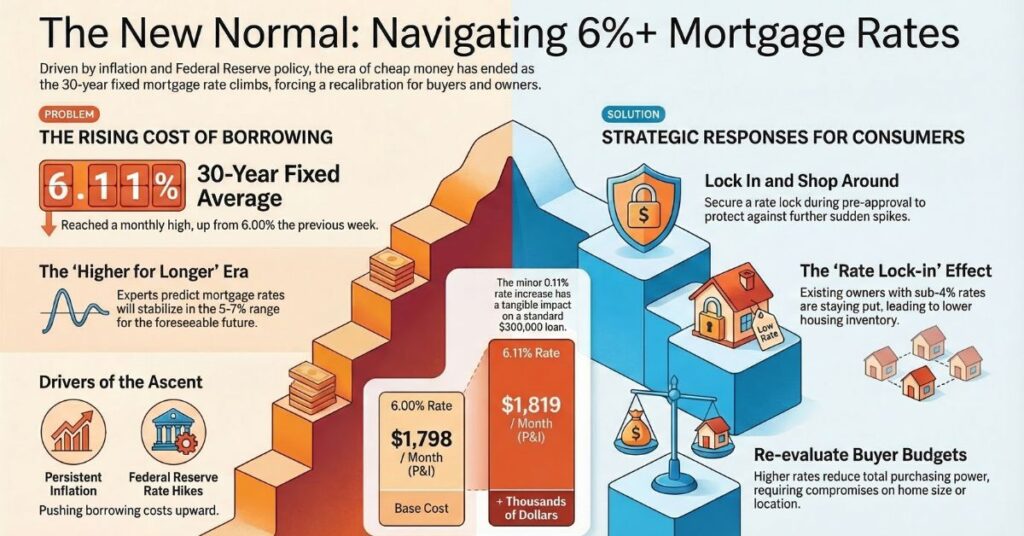
The housing market, a critical pillar of global economies, is once again signaling shifts that demand our attention. This week, the average rate on a 30-year fixed mortgage climbed to 6.11%, according to the latest data released Thursday by Freddie Mac. This figure represents a noticeable uptick from last week”’s 6%, pushing mortgage rates to their highest level in over a month.
While a 0.11% increase might seem minor, its implications are significant, further solidifying a trend towards a more challenging borrowing landscape compared to the historically low rates of recent years. At globalfinmate, we understand the anxieties these movements can trigger, and we’re here to break down what this latest surge means for you, your finances, and your housing aspirations.
Understanding the Recent Ascent in Rates
This recent ascent in mortgage rates isn’t an isolated event but a reflection of broader economic currents. Primary drivers include persistent inflation, the Federal Reserve’s ongoing efforts to tame it through monetary policy, and a general recalibration of market expectations. High inflation prompts lenders to demand higher returns, compensating for money’s eroded purchasing power. The Federal Reserve, aiming to cool an overheated economy, has been steadily increasing the federal funds rate, influencing the overall cost of borrowing.
This creates a ripple effect, making it more expensive for banks to lend, consequently pushing up mortgage rates. Positive economic indicators, such as a robust job market, can also signal continued inflationary pressures, further fueling the rise in long-term interest rates. For those who recall sub-3% rates during the pandemic, the current 6% environment represents a significant paradigm shift. Freddie Mac provides this crucial weekly data, offering a vital pulse check on mortgage costs.
Impact on Prospective Homebuyers: A Tightening Squeeze
For prospective homebuyers, particularly first-time buyers, this latest rate hike presents a significant hurdle. A seemingly small increase from 6% to 6.11% translates directly into higher monthly mortgage payments, reducing purchasing power. Consider a hypothetical $300,000 loan. At 6%, the principal and interest payment is approximately $1,798/month. At 6.11%, it rises to roughly $1,819. This $21 difference, while seemingly small monthly, accumulates to thousands more over 30 years. This erosion of affordability forces many to adjust budgets, compromise on their ideal home, or delay homeownership.
Beyond individual budgets, rising rates are impacting overall market dynamics. The intense competition and rapid appreciation characteristic of the recent past are beginning to dissipate. Buyers are becoming more discerning, and homes may stay on the market longer. While this might lead to a more balanced market, offering buyers a slight edge, the cost of entry is fundamentally higher. First-time homebuyers, often challenged by down payments and closing costs, are hit particularly hard. At globalfinmate, we recognize these challenges and advocate for thorough financial planning before embarking on your home buying journey.
Impact on Current Homeowners: Refinancing’s Diminished Allure
Existing homeowners, especially those who secured historically low rates, are largely insulated from this particular rate increase. For them, the allure of refinancing has diminished significantly. Many locked in rates well below 4% or even 3% during the low-interest-rate environment. With current rates around 6.11%, refinancing to a higher rate simply doesn’t make financial sense. This ”’rate lock-in”’ contributes to lower inventory, as homeowners are less incentivized to sell if it means trading a low mortgage rate for a significantly higher one on a new property.
However, rising rates can still affect homeowners. For those considering tapping into home equity via a home equity loan or HELOC, the cost of borrowing will be higher. While these options provide access to capital, increased interest rates mean any new borrowing against their home comes at a steeper price. It’s a critical time for homeowners to review existing mortgage terms and consider all options carefully. GlobalFinMate provides resources and guidance to help you make informed choices regarding your home equity and mortgage management.
Broader Economic Implications
The upward movement in mortgage rates is a critical indicator not just for the housing market but for the broader economy. Housing is a significant sector, contributing substantially to GDP. When mortgage rates rise, it tends to cool housing activity, with cascading effects across various industries. Less home buying can mean less spending on furnishings, appliances, and renovations, impacting retail and manufacturing.
From a monetary policy perspective, rising mortgage rates are often an intended consequence of central banks efforts to combat inflation. By making borrowing more expensive, the Federal Reserve aims to reduce overall demand, slowing price increases. This is a delicate balancing act to avoid recession while preventing entrenched inflation. The 6.11% rate reflects the market’s digestion of these efforts and expectations, signaling that the era of ”’cheap money”’ is behind us. Understanding these macroeconomic forces is crucial for individuals and businesses. At globalfinmate, we continually monitor these economic shifts to provide you with timely insights.
What This Means for You: Actionable Steps
In a fluctuating rate environment, proactive financial planning is paramount. Here”’s what this latest mortgage rate increase means for you and some actionable steps:
For Prospective Buyers:
- Get Pre-Approved & Lock Your Rate: If serious about buying, get pre-approved. Some lenders allow you to ”’lock in”’ a rate for a specific period, protecting you if rates climb while you house hunt.
- Shop Around: Compare offers from multiple lenders (banks, credit unions, online) to secure the best possible terms. Even a small difference saves thousands over the loan”’s life.
- Re-evaluate Your Budget: Higher rates reduce purchasing power. Revisit your budget to understand what you can truly afford for monthly payments, taxes, insurance, and maintenance.
- Consider ARMs Cautiously: Adjustable-Rate Mortgages start with lower rates for an initial period. Be aware of potential payment increases once the fixed period ends. Suitable if you plan to sell/refinance before adjustment or are comfortable with volatility.
- Focus on Financial Health: Improve your credit score and save aggressively for a larger down payment to help qualify for better rates.
- Stay Informed: Monitor economic news and rate trends. globalfinmate is your resource for up-to-date market analysis.
For Homeowners:
- Review Your Mortgage: If you have a low fixed rate, you”’re likely in a strong financial position.
- Explore Home Equity Options Carefully: If accessing capital, investigate home equity loans or HELOCs, but note their rates will also be higher. Weigh costs and benefits thoroughly.
- Accelerated Payments: If you have extra cash, making additional principal payments can significantly reduce total interest paid and build equity faster, especially attractive with higher rates.
Navigating these financial waters requires diligence and informed decision-making. globalfinmate is committed to empowering you with the knowledge to make the best choices.
Future Outlook: A ”’Higher for Longer”’ Environment?
Predicting the exact trajectory of mortgage rates is difficult, influenced by complex domestic and global economic factors. However, the current consensus suggests rates are unlikely to return to pandemic-era lows soon. The Federal Reserve has signaled its commitment to bringing inflation down, likely maintaining a restrictive monetary policy. This doesn”’t mean rates will climb indefinitely; periods of stabilization or slight retreats are possible if inflation eases or economic growth cools rapidly.
Nonetheless, the prevailing sentiment points towards a ”’higher for longer”’ rate environment compared to the last decade. Buyers and homeowners should prepare for mortgage rates in the 5-7% range becoming the new normal. Geopolitical events, supply chain shifts, and economic reports will continue shaping these trends. Staying abreast of developments is crucial. At GlobalFinMate, we continually analyze these indicators to offer current perspectives, helping you anticipate shifts and adapt strategies.
GlobalFinMate: Your Partner in Financial Navigation
In these times of economic volatility, having a trusted partner and reliable information source is invaluable. This is where globalfinmate steps in. Our mission is to empower individuals with the knowledge and tools to navigate complex financial decisions, especially concerning real estate. We provide comprehensive market analysis, break down intricate economic concepts, and offer practical guidance. Whether you”’re a first-time homebuyer, an existing homeowner, or simply looking to stay informed, globalfinmate is your go-to resource. We deliver timely updates on mortgage rate trends, expert advice on budgeting, and help you understand long-term implications. Trust globalfinmate to be your guide through the evolving world of personal finance and real estate.
FAQs
What is the current average rate for a 30-year fixed mortgage?
According to the latest data from Freddie Mac, the average rate has climbed to 6.11%, up from 6% the previous week.
Why are mortgage rates increasing right now?
The rise is driven by broader economic factors, primarily persistent inflation and the Federal Reserve’s efforts to control it by raising the federal funds rate. Additionally, a strong job market can signal inflationary pressure, leading lenders to demand higher returns.
Are we likely to see sub-3% rates again soon?
Current economic consensus suggests a “higher for longer” environment. While rates may stabilize or retreat slightly if inflation cools, experts suggest that rates in the 5% to 7% range are becoming the “new normal.”
How does a 0.11% increase actually affect my monthly payment?
While it sounds small, it impacts purchasing power. For a $300,000 loan, the jump from 6% to 6.11% adds approximately $21 per month. Over the 30-year life of the loan, this totals thousands of dollars in extra interest.
Should I consider an Adjustable-Rate Mortgage (ARM)?
ARMs offer lower initial rates, which can be helpful if you plan to sell or refinance before the fixed period ends. However, they carry the risk of significant payment increases once the rate begins to adjust.
Conclusion: Mortgage rates rise to Highest Level
The recent rise in the average 30-year fixed mortgage rate to 6.11% confirms that the era of exceptionally low borrowing costs is behind us. While this shift presents new challenges, particularly for prospective homebuyers, it underscores the importance of informed decision-making and proactive financial planning. Understanding economic forces like inflation and Federal Reserve policies is key. For those entering the housing market, diligence in shopping for lenders, getting pre-approved, and meticulous budgeting is more crucial than ever. For current homeowners, strategic mortgage management remains vital. The housing market will continue to evolve, but with reliable information and thoughtful preparation, you can confidently navigate its complexities. Stay connected with globalfinmate for ongoing insights and support.
About The Author